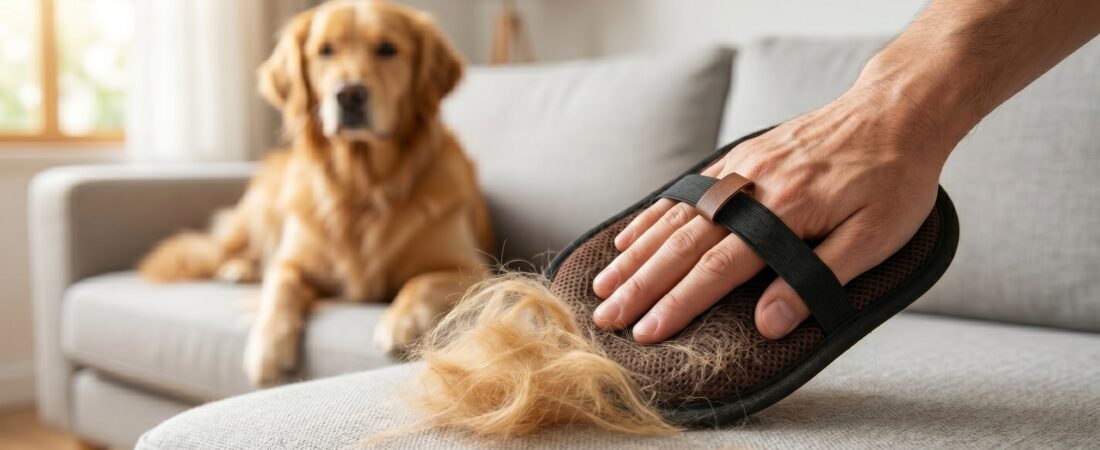
If you own a dog or cat, you probably have a drawer full of used-up lint rollers. Or maybe a pile of them under the couch. You roll, you peel, you throw away a sticky sheet, and by the time you’ve done the sofa and your jacket, half the roll is gone. Then you order more.
It’s one of those purchases that never ends – and most people never stop to think about how much it actually costs them, or how much plastic they’re throwing away every year.
A reusable eco-friendly pet hair remover glove is the alternative that’s been quietly replacing lint rollers in a lot of households. No sheets to peel off. No refills to buy. No adhesive residue. Just a washable glove you use over and over.
This guide breaks down why lint rollers are a bigger problem than people think, how reusable gloves actually work, and what to look for if you want one that lasts.
The Problem With Sticky Lint Rollers and Disposable Sheets
Lint rollers are everywhere because they work fast. But “fast” hides a few things people don’t think about until they’re standing at the checkout for the fourth time that month.
How much plastic and adhesive waste lint rollers create per household
A standard lint roller has about 30–60 sheets per roll. If you have a heavy shedder – a Husky, a Maine Coon, a Golden Retriever – you might burn through a roll a week. That’s 50+ rolls a year, per household.
Each roll comes wrapped in plastic, ships in cardboard, and the sheets themselves are coated in adhesive that can’t be recycled. The cardboard tube is technically recyclable but usually too contaminated to process. Almost all of it ends up in landfill.
It’s a product designed to be replaced constantly. That’s the business model.
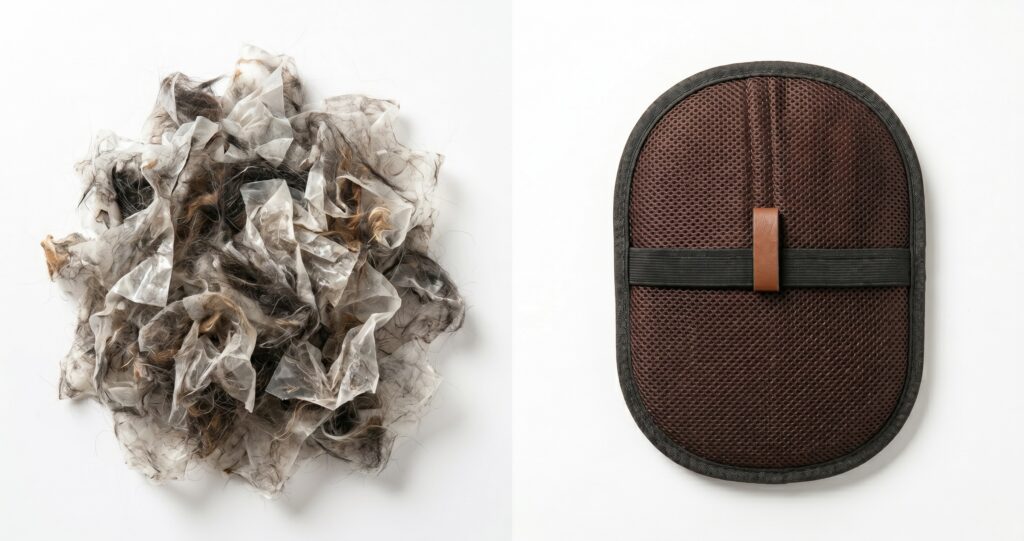
The real cost of lint roller refills over time
Let’s put numbers to it. A 4-pack of lint roller refills runs around $10–$14 on Amazon. If you’re going through one roll a week, that’s roughly $130–$180 a year – just for lint rollers.
A quality reusable pet hair removal glove costs $15–$20 once. Wash it, reuse it, done. The math isn’t complicated.
For most pet owners, the glove pays for itself within the first two months.
How Reusable Pet Hair Removal Gloves Work (Sustainably)
People assume a glove must use some kind of adhesive to work. It doesn’t. The mechanics are completely different – and once you understand them, it makes sense why they work so well without producing any waste.
Electrostatic hair-lifting fabric vs adhesives
High-quality pet hair removal gloves use an electrostatic mesh fabric on the palm and fingers. When you run the glove across a fabric surface, the mesh creates a mild static charge that attracts pet hair and lifts it away from the fibers.
The hair doesn’t stick to the glove permanently – it bunches up into a ball ahead of your hand as you sweep. When you’re done, you peel the ball off the glove and throw it in the bin. No adhesive. No sheets. Nothing to replace.
This works on couch upholstery, fleece, denim, car seats, bedding, and most knit fabrics. The glove doesn’t leave residue or damage fibers, which is something sticky rollers occasionally do on delicate materials.
Washable, long-lasting construction
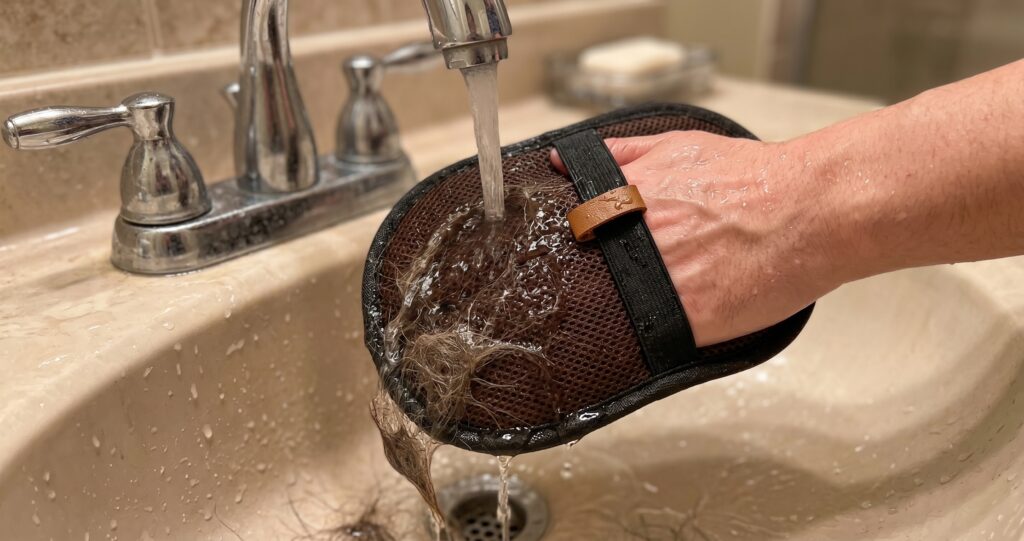
The glove itself is washable – rinse it under the tap after use or throw it in the washing machine. The electrostatic properties hold up through hundreds of washes when the glove is made with durable mesh material.
A well-made glove should last years with regular use. That’s the core sustainability case: one purchase, indefinite use, zero ongoing waste.
Key Features of an Eco-Friendly Pet Hair Removal Glove
Not all gloves are equal. Here’s what actually matters if you want one that works well and lasts.
Durable, non-toxic materials
Look for a glove with a breathable mesh on the working surface – dense enough to generate electrostatic lift, but not so thick it gets stiff. The border and strap should be soft fabric, not hard plastic hardware that will crack over time.
Non-toxic materials matter if you’re using the glove directly on pets for grooming, since the silicone or mesh will be in contact with their skin and coat.
Reusable and fully washable
This sounds obvious but check it. Some cheaper gloves have a working surface that degrades after a few washes or loses its static charge. A good glove should be hand or machine washable and maintain performance over time.
The Glovix pet hair removal glove uses a breathable brown mesh oval pad with an elastic wrist strap, and it holds up through repeated washing without losing its hair-lifting ability.
Multi-surface use – couch, clothes, car seats
A genuinely eco-friendly solution shouldn’t require you to own multiple products. A good glove should handle:
- Fabric sofas and upholstered chairs
- Your own clothes – jackets, sweaters, trousers
- Car seats and trunk liners
- Bedding and throws
- Pet beds and crates
If a glove only works on one surface type, you’ll still end up buying something else for the rest. Multi-surface performance is part of what makes it a true lint roller replacement.
Step-by-Step: Zero-Waste Pet Hair Routine With a Glove
Switching from lint rollers to a reusable glove isn’t just an equipment change – it’s a slightly different routine. Here’s how to build one that takes under five minutes a day.
Daily quick clean-ups on clothes and couch
Before you leave the house, run the glove down each sleeve and across your chest for 20–30 seconds. The hair collects into a ball, you peel it off and bin it. Done.
For the couch: one pass across each cushion, working in a single direction. Hair bunches forward. Peel and dispose. The whole sofa takes two to three minutes.
The key difference from a lint roller is that you’re not pressing down and peeling a sheet after every stroke – you sweep continuously and collect at the end. It feels faster once you get used to it.
Weekly deep clean routine
Once a week, go over the surfaces you don’t hit daily – car seats, the back of chairs, throws and blankets, pet beds. Use the five-finger design to get into seams and corners where hair accumulates.
This is where a glove outperforms a roller most obviously – a roller can’t reach into a seat seam or along a zip edge. Your fingers can, and with the glove on, they collect hair as they go.
Caring for your glove to maximize lifespan
After use, rinse the mesh under cool water to remove any fine hair caught in the fibers. For a deeper clean, hand wash with mild soap and air dry. Machine washing on a gentle cycle works fine for most gloves – avoid high heat in the dryer, which can degrade the mesh over time.
Store it flat or hanging so the mesh doesn’t get compressed out of shape. A glove stored properly and washed regularly should last two to three years with daily use.
Glove vs Other Low-Waste Pet Hair Tools
The glove isn’t the only reusable option on the market. Here’s how it stacks up against the other alternatives people actually use.
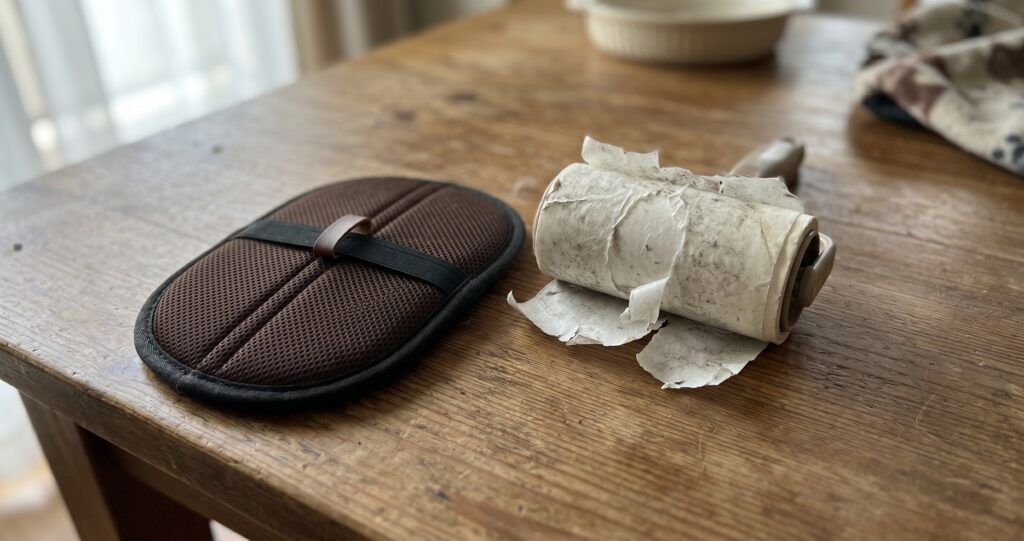
Reusable rollers and rubber scrapers
Products like the ChomChom roller and Uproot Clean are popular because they work well – but they’re single-surface tools designed for flat upholstery. They’re less useful on clothing, don’t work in tight spaces, and require a specific rolling motion that’s awkward on car seats.
They’re also bulkier to carry around and don’t double as a pet grooming tool the way a glove does.
Rubber brushes and grooming mitts
Rubber brushes work similarly to gloves but are typically smaller and harder to control. A full five-finger glove gives you more surface area, better grip, and the ability to use your fingers to get into corners.
Grooming mitts designed purely for pet brushing often don’t work well on furniture because they’re optimized for the contours of a dog or cat, not a flat couch surface. A dual-purpose glove handles both.
Where gloves fit in a zero-waste cleaning toolkit
A reusable glove is the most versatile single tool for pet hair. It works on pets, clothes, furniture, and car seats, stores in a pocket or drawer, costs less than two months of lint roller refills, and produces no ongoing waste.
For most pet owners, it replaces lint rollers entirely. For households with extreme shedding, a glove plus a reusable couch scraper covers all bases without any disposable products.
How to Choose the Right Eco Pet Hair Glove (Buyer’s Checklist)
Before you buy, run through this list.
Material, construction, and durability
- Mesh surface: Dense enough to generate static lift. Flexible enough to conform to curved surfaces.
- Strap: Elastic or adjustable, not a hard buckle. Should fit comfortably over your wrist without slipping during use.
- Border: Soft fabric, not hard plastic edging that will crack or scratch surfaces.
- Washability: Confirmed machine or hand washable. Check reviews for long-term durability after repeated washes.
Fit, grip, and comfort
- The glove should fit snugly enough to stay put during use but not restrict circulation.
- A full five-finger design gives better reach than a mitt or paddle-style glove.
- If you plan to use it for pet grooming as well as surface cleaning, look for a glove with a soft enough working surface that your pet won’t object to it.
The Glovix glove hits all of these – oval mesh pad, elastic wrist strap, soft border, and a design that pets tend to accept because the mesh feels like a gentle scratch rather than a brush bristle.
FAQs: Eco-Friendly Pet Hair Removal Without Sticky Sheets
Does a reusable glove actually work as well as a lint roller?
On most surfaces, yes – and on some (car seats, couch seams, clothing) it works better. The main difference is technique: you sweep rather than roll-and-peel. It takes one session to get the hang of it.
How do I clean the glove after use?
Rinse under cool water to remove loose hair, or wash with mild soap. Machine wash on gentle. Air dry or tumble dry on low. Don’t use fabric softener, which can reduce the static properties of the mesh.
Can I use the glove on delicate fabrics?
Yes. The electrostatic mesh lifts hair without adhesive, so there’s no risk of residue or pulling on fabric fibers. It’s safe on velvet, microfiber, cotton, wool, and most upholstery fabrics. Test a small area on very delicate or vintage materials first.
Will my cat or dog accept being groomed with a glove?
Most do, especially cats that resist traditional brushes. The mesh surface mimics the feeling of being petted, which many animals find more comfortable than bristle brushes. Introduce it slowly the first time – let your pet sniff it before you use it.
How long does a reusable glove last?
A well-made glove washed and stored properly should last two to three years with daily use. The mesh retains its static properties through hundreds of washes, unlike adhesive-based tools that have an inherent end-of-life.
Is a reusable pet hair glove actually more eco-friendly than a lint roller?
Yes, significantly. A lint roller produces roughly 50+ rolls of plastic-coated, adhesive-contaminated waste per year per heavy-shedding household. A reusable glove produces none after the initial purchase. It’s one of the simplest low-waste swaps for pet owners.
If you’re ready to stop buying lint roller refills, the Glovix pet hair removal glove is a good place to start. One purchase, no ongoing cost, and it works on everything from your couch to your car to your cat.